Guides
How to Remove Moss, Lichen & Algae From a Headstone
Headstone cleaning from £75 — before & after photos with every visit.
No need to attend. Free written quote, usually within 24 hours.
In short: Moss and green algae lift off a headstone with plain water, a soft brush and patience. Lichen is the hard one — it is bonded into the surface of the stone, so it must be softened with a conservation biological cleaner that keeps working over days and weeks, then gently brushed and rinsed. Never scrape or pick lichen, because that pulls the face of the stone away with it, and never use bleach, acid, a wire brush or a pressure washer. Expect the growth to fade over weeks, not in an afternoon.
Green and black growth on a memorial is one of the most common things families ask us about. It looks neglectful even when the grave is visited often, and it spreads quietly in London’s damp, shaded cemeteries. Most of it comes off safely with very simple kit — but moss, algae and lichen behave differently, and the wrong approach can do permanent harm. This guide explains how to tell them apart, remove each one safely, and keep them from coming straight back. If the grave you tend is in Tower Hamlets, see grave cleaning at Tower Hamlets Cemetery Park.
Why moss, lichen and algae grow on memorials
Cemeteries are close to perfect growing conditions: damp ground, still air, mature trees and long hours of shade. A headstone is a cool, often north-facing surface that stays wet — exactly what these organisms need. London’s mild, humid climate keeps stone damp for much of the year, so growth that would dry out elsewhere keeps going here. Our guide to caring for a grave through winter covers the colder months.
It helps to know what each one is, because that tells you how stubborn it will be:
- Green algae is a thin, slimy or powdery green film. It sits on the surface, holds no real grip, and is the easiest to remove.
- Moss is the soft, cushiony green growth in lettering, along the top edge and where the stone meets the base. It roots into dirt and crevices rather than the stone itself, so it lifts away fairly readily.
- Lichen is the flat, crusty growth in grey, white, yellow, orange or black, often in circular patches. It is not really a plant but a partnership of fungus and algae, and it bonds into the surface of the stone. That bond makes it the difficult one.
Why lichen is the hardest to remove
Moss and algae sit on top of a headstone. Lichen grows into it: its threads work down into the pores of the stone and anchor there, so a patch feels like part of the surface rather than something resting on it.
This is the single most important point in this guide: never scrape, pick or chisel lichen off. Because it is bonded to the stone, anything you lift takes a thin layer of the surface with it — the result is pitting, pale scarred patches and lost detail on lettering. On softer stone such as marble, limestone and sandstone the damage is immediate and permanent, and the lichen grows back anyway. It has to be softened and killed in place, then allowed to weather away gently.
The safe removal method
The approach is gentle and water-led. You need almost nothing: clean water, a soft natural-bristle or nylon brush, a plastic or wooden spatula for loose debris, and — for lichen — a conservation-grade biocide.
1. Wet the stone thoroughly. Soak the whole headstone with clean water and let it sit for a few minutes. Working dry scratches the surface; working wet floats the dirt off. Always work from the bottom upwards to avoid streaks running down dry stone.
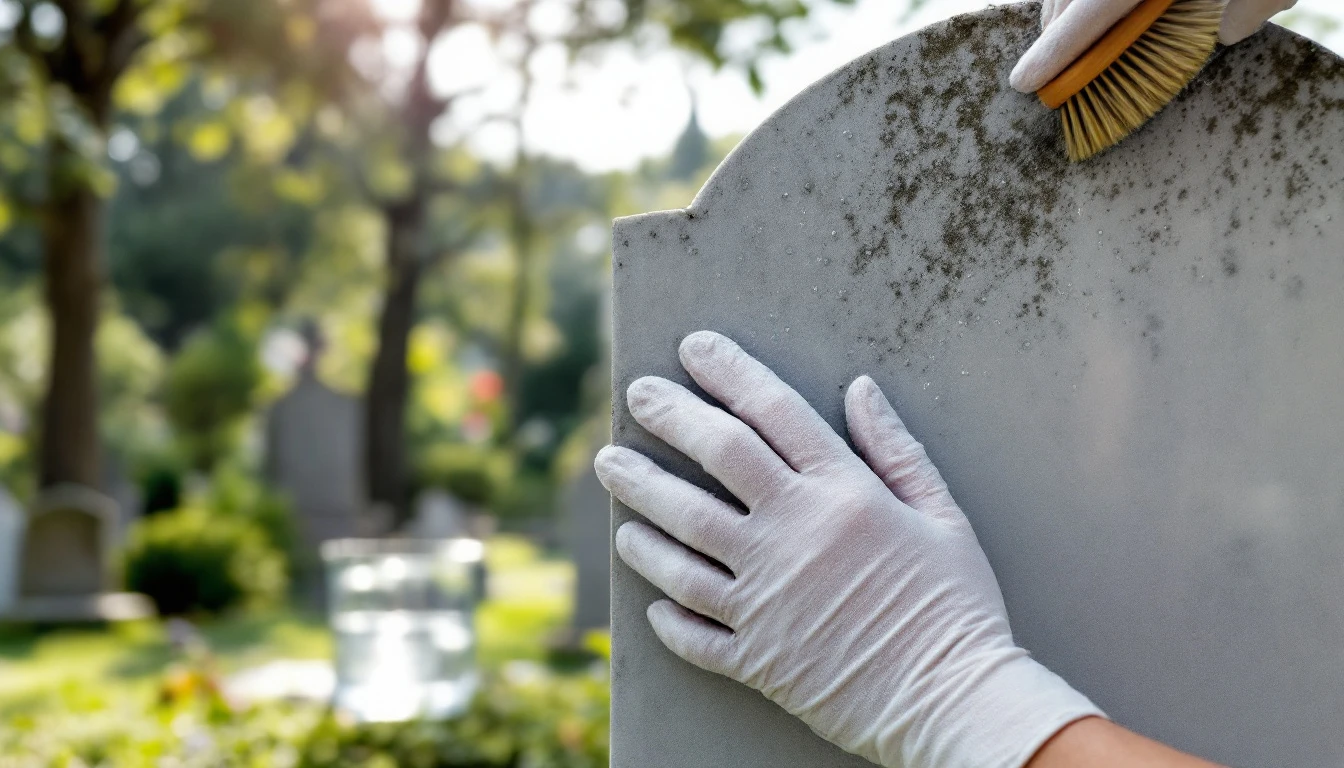
2. Brush moss and algae away. With the stone wet, work a soft brush gently over the surface. Most green algae rinses off with very little effort, and moss lifts out of lettering and edges with light brushing. Use a spatula only to ease clumps out of deep carving — never a metal tool, never a scraper, never force.
3. Treat lichen with a biological cleaner. Apply a stone-safe conservation biocide at the correct dilution, then leave it alone. These products keep working over days and weeks, killing the lichen down into the stone so it loosens its grip naturally. Do not scrub to speed things up.
4. Repeat gently, then rinse. As the lichen dies it changes colour, dries out and flakes away on its own, often helped along by rain. A light brush and a second application a few weeks later clears stubborn patches. Finish by rinsing well with plenty of clean water.
Be realistic about the timeline. Moss and algae can look much better the same day. Lichen does not — it fades over weeks, not instantly, and rushing it is how people damage the stone. Slow is safe.
What never to use
Faced with stubborn growth, the temptation is to reach for something stronger. Please don’t. Bleach drives damaging salts into the stone and causes flaking weeks later. Acids — including vinegar — etch and dissolve marble, limestone and sandstone permanently. A wire brush leaves metal fragments that rust into orange streaks. A pressure washer blasts off the softened surface, lettering and gilding, and forces water deep into the stone.
None of these belong near a memorial. We cover the full list in what not to use on a headstone. The safe method really is just water, a soft brush, a stone-safe biocide for lichen, and patience.
Preventing regrowth
Moss, algae and lichen will always try to return in a damp London cemetery, but you can slow them down considerably.
- Keep the stone clean. Growth takes hold fastest on dirty, already-colonised stone; a clean surface stays clear far longer.
- Improve light and airflow where you can. Where permitted, cutting back an overhanging branch or clearing dense planting that traps damp makes a real difference. Check the cemetery’s rules first.
- Treat early, gently and regularly. A light touch a couple of times a year prevents the heavy, bonded build-up that is so hard to shift later; our guide to how often a grave should be cleaned helps with timing.
This is exactly what a grave maintenance plan is for: regular, scheduled care that keeps growth from returning, from £45 a quarter (or from £150 a year). It is kinder to the stone, and usually cheaper over time, than letting things build up and needing a full restoration. If it has already come to that, see restoring a neglected or overgrown grave.
When to call a professional
Plain green algae and a little moss are well within reach of a careful family member, and our step-by-step guide to cleaning a headstone safely walks through the full routine. Consider professional help when:
- there is heavy, established lichen, especially on marble, limestone or sandstone;
- the memorial is old, fragile, leaning or unstable, or the lettering is worn and delicate;
- previous cleaning has already caused staining, etching or surface damage; or
- you would simply rather not risk a stone that matters to you.
Memorial Guardian London has cleaned memorials across all 32 boroughs since 2015, using only conservation-grade, pH-neutral, biologically-safe products and never a pressure washer. See grave care at Ladywell Cemetery for one of the cemeteries we work in. A single grave cleaning starts from £85, and dedicated headstone cleaning from £75. Every visit includes before-and-after photographs and a written report.
Request a free assessment
If a memorial in your care is covered in moss, algae or stubborn lichen and you are not sure how to tackle it safely, we are glad to take a look. Memorial Guardian London works across all 32 boroughs and the wider M25 area using only gentle, stone-safe methods, with travel within the M25 included in our quotes. Our work includes grave and headstone cleaning across East London. Request a free, no-obligation assessment and we will tell you honestly what the stone needs.
Frequently asked questions
- Will the lichen come back after I remove it?
- Most likely, yes — lichen, moss and algae are persistent in damp, shaded cemeteries, and a single clean does not change the conditions that let them grow. The way to stay ahead is regular, gentle care a couple of times a year, which is why many families choose a maintenance plan.
- Can I just scrape the lichen off — it's only on the surface?
- No. Lichen looks surface-level but is bonded into the stone, so scraping or picking pulls the face of the stone away too, leaving permanent pits and scars. It must be softened with a stone-safe biological cleaner and allowed to weather away, never forced off.
- How long does it take to get rid of lichen?
- Weeks rather than days. A conservation biocide keeps working over time, killing the lichen down into the stone so it dries, changes colour and flakes away gradually, often with help from the rain. A second light treatment a few weeks later usually clears stubborn patches.
- Is it safe to use a pressure washer to blast the moss off?
- Never. A pressure washer strips the softened outer surface of weathered stone, tears off lettering and gilding, and drives water deep into the memorial. Moss comes off perfectly well with plain water and a soft brush.
Headstone cleaning from £75 — before & after photos with every visit.
No need to attend. Free written quote, usually within 24 hours.
About the author
Practical guides written collectively by Memorial Guardian London's memorial care specialists, drawing on their day-to-day work cleaning and conserving graves and headstones across all 32 London boroughs.