Guides
How to Clean a Headstone Safely (and When to Stop)
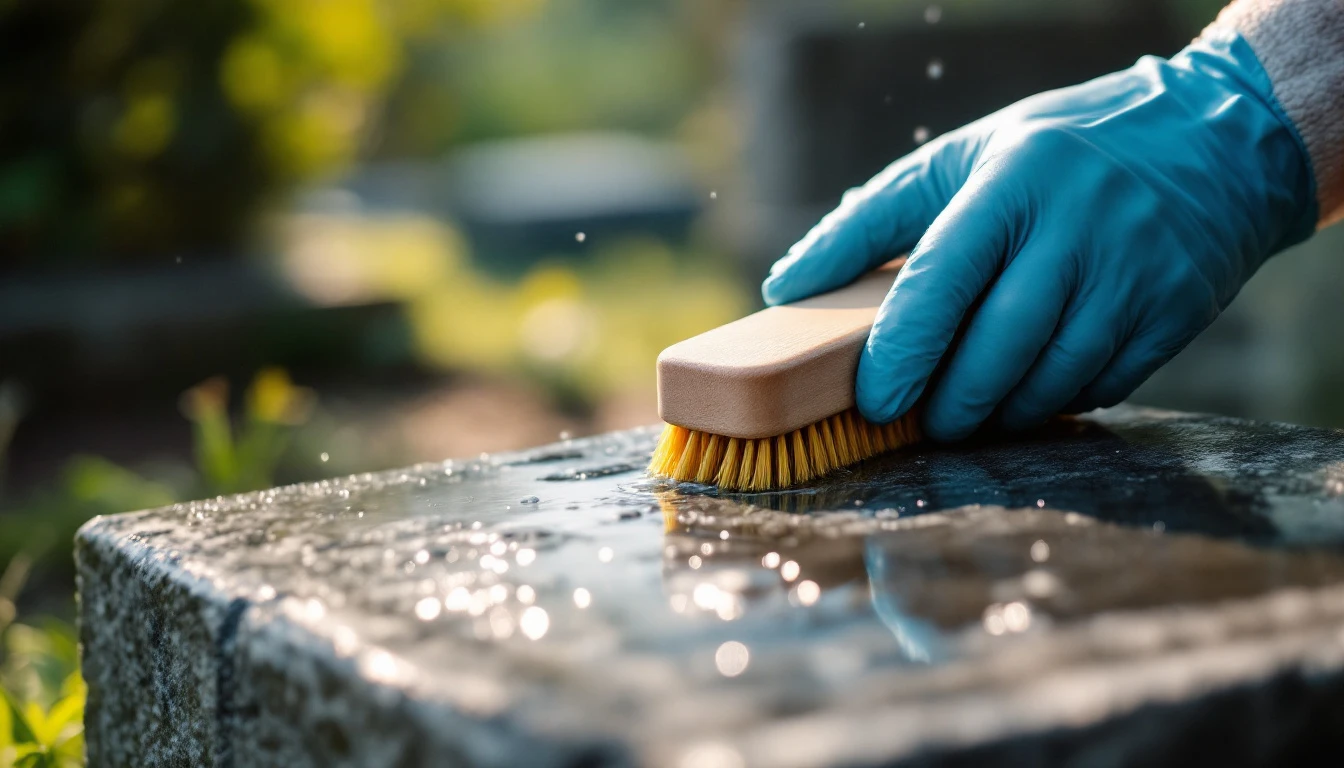
Headstone cleaning from £75 — before & after photos with every visit.
No need to attend. Free written quote, usually within 24 hours.
In short: To clean a headstone safely, use only plain water and a soft natural or nylon brush, working from the bottom up and rinsing from the top down to avoid tide marks. Never use bleach, acid, washing-up liquid, wire brushes or a pressure washer — they cause permanent damage. If the stone is flaking, cracked, or heavily stained, stop and call a professional.
Cleaning a loved one’s headstone is a quiet, caring act. For many families it becomes part of how they remember someone — a few unhurried minutes spent tending a place that matters. Done gently, with nothing more than water and a little patience, it can lift years of grime and bring a memorial back to life. Done with the wrong products, the same effort can scar the stone forever. This guide walks you through how to clean a gravestone safely in the UK, what to keep well away from it, and the honest signs that it is time to step back and let a specialist take over.
Is it safe to clean a headstone yourself?
For a sound, modern granite headstone, a gentle clean with water and a soft brush is usually safe and genuinely rewarding. Granite is hard, dense and forgiving, which is why it is the most common choice for memorials today.
Older or softer stone is a different matter. The difference is measurable: on the Mohs hardness scale, granite rates around 6–7, while marble is only about 3 — soft enough to be scratched by a steel blade or etched by a mild acid. Marble, limestone and sandstone are soft and porous — they absorb water and any chemical you put on them, and they wear away under pressure that granite would shrug off. If the memorial is Victorian, weathered, or made of anything other than polished granite, treat it with extra care. If yours is at Wimbledon, see grave cleaning at Gap Road Cemetery (Wimbledon Cemetery). And if it is flaking, cracked, leaning or unstable in any way, cleaning can do real harm. When in doubt, leave it to a professional headstone cleaner rather than risk a memorial you cannot replace.
A useful rule: if you would not scrub it on your grandmother’s antique furniture, do not do it here either.
What you will need
You need surprisingly little. The temptation is to reach for something stronger, but gentle and slow always wins with stone.
- A bucket of clean, plain water — no additives of any kind
- A soft-bristled brush, natural or nylon — never wire or metal
- A softer brush (an old toothbrush works) for carved lettering and detail
- A wooden or plastic scraper for loose debris — never metal
- Soft, clean cloths
- A second bucket of fresh water for rinsing
- Patience, and ideally a dry, mild day
How do you clean a headstone, step by step?
Work calmly and let the water do the work. There is no prize for speed, and rushing is exactly how stone gets damaged. This water-and-soft-brush method is exactly what Historic England recommends in its guidance on cleaning cemetery monuments, which advises against pressure washing, chemicals and surface coatings on memorial stone.
- Clear the area first. Remove leaves, fallen petals, weeds and debris from around the base and grass line by hand. Lift off any loose moss with your wooden or plastic scraper — gently, never gouging.
- Wet the stone thoroughly with plain water. Soak it before you touch it with a brush. Always work from the bottom up. This matters: wetting the lower stone first stops dirty water running down dry areas and leaving “tide marks” — pale, streaky lines that are very hard to remove later.
- Brush gently in small circles, re-wetting often so the surface never dries out. Use light pressure only. Switch to your softer brush for inscriptions, carved detail and any gilded or painted lettering, which is delicate.
- Try water alone first, and give it time. Much of what looks like staining is simply surface dirt that lifts with repeated gentle wetting and brushing. You may need to go over an area two or three times. Resist the urge to “help it along” with anything stronger.
- Rinse from the top down once the stone is clean, letting fresh water carry the loosened dirt away evenly. This top-down rinse is the step that prevents tide marks setting in.
- Leave it to dry naturally. Do not towel-buff polished granite — it can leave smears. Simply let the air do it.
That is the whole method. For most headstones, water, a soft brush and a little time is all you will ever need.
What should you NOT use on a headstone?
This is the part that matters most, because the damage is often invisible at first and permanent by the time it shows. Keep all of the following away from any memorial:
- Bleach — reacts with the minerals in stone, causing yellowing, salt deposits and a chalky surface that can appear weeks or months later.
- Acidic cleaners (including brick acid, patio cleaners and many “limescale” products) — these eat into marble, limestone and sandstone, etching and pitting the surface irreversibly.
- Washing-up liquid and household cleaners — leave residues that attract more dirt and can discolour stone over time.
- Wire brushes, scouring pads and metal scrapers — scratch the surface and strip any polish, lettering or finish.
- Pressure washers — far too forceful for memorial stone. They blast out the soft jointing, drive water deep into porous stone, erode carved lettering and can dislodge sections entirely.
The short version: no chemicals, no abrasion, no force. We go through each of these in more detail, and why they cause the harm they do, in what not to use on a headstone.
How do you clean a granite, marble or sandstone headstone differently?
The stone itself decides how much you can safely do.
Granite is the most tolerant. A gentle wash with water and a soft brush suits it well, and a sound granite memorial can take a careful clean without trouble. Polished granite simply wants drying by air, not buffing. For more on this stone, see how to clean a black granite headstone.
Marble and limestone are soft, porous and easily scratched or etched. Use the lightest touch, plain water only, and accept that some weathering and dulling is age, not dirt — chasing it with stronger methods only damages the stone. Never use anything acidic near them.
Sandstone is soft and crumbly, and prone to “sugaring” (a sandy, shedding surface) and flaking. If a sandstone memorial is shedding grains or flaking at all, do not brush it — even gentle brushing pulls the surface away. This is one to leave to a conservator.
Because the right method really does depend on the material, it is worth identifying yours first. Our stone-type cleaning guide explains how to tell them apart and how each should be treated.
What about black crust, lichen and biological growth?
Black biological growth, green algae and lichen are common on London memorials, especially in shaded or damp cemeteries. They are living organisms, and the safe way to deal with them is not to scrub them off — scrubbing only removes the surface and leaves the roots behind to return quickly, often taking a layer of stone with them. If the grave you tend is in Ealing, see grave cleaning at South Ealing Cemetery.
The conservation-minded approach uses a specialist, pH-neutral biocide — the kind professionals apply (a “D/2”-style biological soiling cleaner is the recognised standard). This is not a marketing claim: a six-year study (2004–2011) funded by the US Department of Veterans Affairs and carried out by the National Park Service and Harvard University tested commercial cleaners on memorial stone and found a pH-neutral biological solution — containing no bleach, acid or salts — to be the best performer. It is now used to clean more than 3.5 million headstones across US national cemeteries. Applied correctly, it is brushed on gently, left to work over days or weeks, and allowed to lift the growth slowly and naturally as the stone weathers, sometimes with a light second application. It contains no bleach or acid and does not need pressure or hard scrubbing. Done properly it is gentle and effective; done impatiently — scrubbed or rinsed off too soon — it simply will not work. If a memorial has heavy black crust or established lichen, this is genuinely a job for someone who treats stone for a living.
How often should you clean a headstone?
Once or twice a year is plenty for most memorials, and gentler than you might think is the right instinct. A light wash each spring, and perhaps again before a significant anniversary or before All Souls’ Day, keeps a stone cared for without over-handling it. Some families time the spring clean for Qingming; see the meaning and customs of Qingming. Frequent heavy cleaning does more harm than good, particularly on softer stone. Between cleans, simply keeping leaves, bird mess and weeds cleared from around the base does a great deal to slow staining and growth. Our guide to how often a grave should be cleaned goes into the timing in more detail.
When should you stop and call a professional?
Trust your eyes, and err on the side of caution. Stop and seek specialist help if you notice any of the following:
- Flaking, crumbling or a sandy, shedding surface (“sugaring”)
- Cracks, chips or sections that feel loose or move
- Lead or gilded lettering that is lifting, missing or loose
- Heavy black crust or established lichen that water will not budge
- A leaning, sinking or otherwise unstable memorial
- Anything old, soft or unusual that you are unsure about
These need patient, conservation-minded treatment and, in the case of instability, proper safety knowledge — a leaning headstone can be heavy and dangerous. A specialist can also clean stone that is structurally sound but too stained or fragile for a home clean to touch safely.
Do you need permission to clean a grave?
It is easy to overlook, but in many cemeteries and churchyards the registered grave owner’s consent is needed before any cleaning or restoration takes place, and some have rules about what may be used. It is worth checking before you start. Read do you need permission to clean a grave in London? for what to consider first.
Tending a headstone yourself can be a comforting, meaningful thing to do, and with nothing more than water, a soft brush and a little patience, most families can do it beautifully and safely. But there is no failure in deciding it is too much — whether because the stone is fragile, the staining is stubborn, or simply because making the journey is hard.
If you’d prefer to leave it to a professional, our guide to grave cleaning costs in London explains pricing and what to expect.
If you would rather have it done with care, Memorial Guardian London provides gentle, stone-safe grave cleaning and headstone cleaning across all 32 London boroughs and the surrounding M25 area, including grave care at Brockley Cemetery. Our full grave cleaning service is conservation-minded, never uses bleach, acid or pressure washers, and includes before-and-after photographs with every visit so you can see the difference even if you cannot be there. Get in touch for a free, no-obligation quote.
Frequently asked questions
- Is it safe to clean a headstone yourself?
- For a sound, modern granite headstone, a gentle clean with plain water and a soft brush is usually safe. Older or softer stone — marble, limestone or sandstone — is far more fragile, and any memorial that is flaking, cracked, leaning or unstable should be left to a professional rather than risk irreversible damage.
- What is the safest way to clean a headstone?
- Use only plain water and a soft natural or nylon brush. Wet the stone first, work from the bottom up, brush gently in small circles, then rinse from the top down to avoid tide marks. Let it dry naturally. Historic England recommends exactly this — water and a soft brush, never chemicals or pressure washing.
- What should you never use on a headstone?
- Never use bleach, acidic cleaners (including vinegar and limescale removers), washing-up liquid, wire brushes, scouring pads or a pressure washer. They cause yellowing, etching, scratching and salt damage that is often permanent and may only appear weeks later.
- How often should you clean a headstone?
- Once or twice a year is plenty for most memorials — typically a light wash in spring and again before a significant anniversary. Frequent heavy cleaning does more harm than good, especially on softer stone. Keeping leaves and weeds cleared between cleans slows staining and growth.
- How do you remove black crust or lichen from a headstone?
- Do not scrub it off — that removes the surface and leaves the roots to return. The conservation-minded method is a pH-neutral, stone-safe biocide (a 'D/2'-style biological cleaner) brushed on gently and left to lift the growth slowly over days or weeks. Heavy black crust is best left to a specialist.
Headstone cleaning from £75 — before & after photos with every visit.
No need to attend. Free written quote, usually within 24 hours.
About the author
Memorial Care Specialist, Memorial Guardian London
Dom Deacon has worked in memorial care and grave cleaning for more than 10 years, and oversees cleaning and conservation for Memorial Guardian London, caring for graves and headstones across all 32 London boroughs. He works to conservation-minded standards — water and stone-safe methods only, never bleach, acid or pressure washers.