Guides
Restoring Faded Headstone Lettering & Re-Gilding
Headstone cleaning from £75 — before & after photos with every visit.
No need to attend. Free written quote, usually within 24 hours.
In short: Faded headstone lettering is restored either by repainting the incised letters (typically from £95) or by re-gilding them with 23.75ct gold leaf for a lasting, traditional finish. Re-gilding lasts far longer and looks richer; repainting is more affordable. Both should be done by a professional to avoid paint bleeding onto the surrounding stone.
There is a particular sadness in standing before a memorial and no longer being able to read the name carved into it. Over the years, the painted or gilded lettering on a headstone slowly fades until the inscription becomes a ghost of itself — the letters still there in the stone, but lost to the eye. Restoring that lettering brings a loved one’s name back to life, and it is one of the most rewarding parts of memorial care we carry out across London. This guide explains how headstone lettering restoration works, the difference between repainting and re-gilding, what each costs, and why this is a job best left to skilled hands.
Why does headstone lettering fade?
When a memorial is first carved, the incised letters are filled with paint or gilded with gold leaf so they stand out clearly against the stone. That finish is exposed to everything the British climate can offer. Rain washes at it season after season, frost works into the smallest gaps, and ultraviolet light from the sun gradually breaks down pigments and binders. In London, airborne pollution and traffic grime add another layer of wear, dulling the surface and leaving a film across the letters. Churchyard memorials wear in just the same way; see memorial care at St Mary’s Churchyard, Hendon.
Most painted inscriptions begin to look tired within ten to twenty years, sometimes sooner on a south-facing memorial or one beneath trees. The paint thins, flakes and eventually disappears, leaving the letters the same colour as the surrounding stone and very difficult to read. Gilded lettering generally lasts longer than paint, but it too will eventually need attention. None of this reflects neglect — it is simply what time does to an outdoor monument, and it is entirely reversible. Faded lettering is also one stage of restoring a neglected or overgrown grave.
Repainting vs re-gilding
When it comes to renewing faded lettering, there are two main approaches, and the right one depends on your budget, the original finish and the look you want to achieve.
- Repainting — the incised letters are carefully cleaned out and repainted, most commonly in black, white or grey enamel to match the original. It is the more affordable option, gives an immediate and crisp result, and typically lasts several years before it needs refreshing. For many families it is the sensible, proportionate choice.
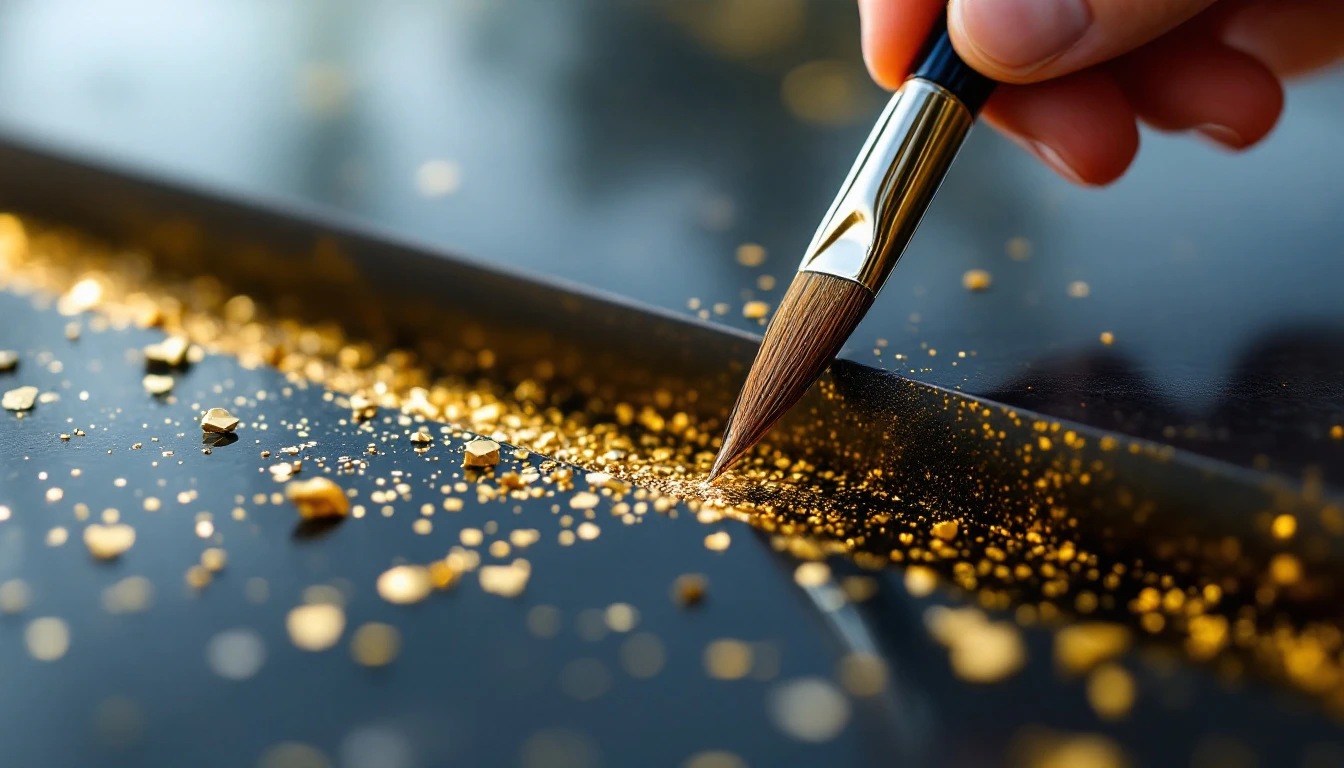
- Re-gilding — the letters are finished with 23.75ct gold leaf, the traditional method used on finer memorials for centuries. It costs more, but it lasts far longer than paint and has a depth, warmth and richness that paint simply cannot match. In bright weather it catches the light beautifully.
As a rule of thumb, repainting restores the inscription; re-gilding elevates it. If the memorial was originally gilded, re-gilding keeps it faithful to its design. If it was painted, repainting is usually the natural choice — though some families take the opportunity to upgrade to gold leaf for a name that deserves it.
What is 23.75ct gold leaf gilding?
Gilding is the craft of applying genuine gold leaf to the incised letters. We use 23.75ct gold leaf, the standard for monumental work, because at that purity the gold is almost completely resistant to tarnishing, weathering and pollution. Each letter is sized with a precise adhesive, the wafer-thin leaf is laid into the incision, and the surplus is brushed away to leave clean, bright lettering.
Done properly, gold leaf does not fade in the way paint does — it can remain legible and lustrous for decades. This durability is exactly why it has been the traditional finish for memorials of significance, and why re-gilding remains the gold standard, quite literally, for headstone lettering and gilding. It is more labour-intensive than painting, which is reflected in the cost, but the result is a finish that honours the memorial for a generation rather than a few years. Re-gilding can be paired with a clean of the whole stone; see grave cleaning at London Road Cemetery, Bromley.
Can I repaint headstone lettering myself?
We understand the temptation, particularly when a name has become hard to read and you simply want it back. Honestly, though, we do not recommend it. Lettering restoration looks straightforward and is anything but.
The real skill lies in cutting the paint cleanly to the very edge of each letter without it bleeding onto the surrounding stone. Once paint strays onto polished granite or porous limestone, it is extremely difficult to remove and can leave a permanent shadow or stain that looks worse than the faded lettering you set out to fix. Choosing the wrong paint, or applying it over a damp or dirty surface, leads to flaking and an uneven finish within months. A professional works with the right materials, a steady hand and years of practice, producing a sharp, durable result. When the memorial of someone you love is at stake, that margin matters.
Adding a new inscription to an existing memorial
Lettering work is not only about restoration. A common request is the addition of a new inscription — most often a second name when a partner has passed and is to be remembered on the same headstone. The new lettering is carved to match the lettering style, size and depth of the original as closely as possible, then painted or gilded to sit in harmony with what is already there.
This work is usually carried out on-site, at the graveside, so the memorial does not need to be removed. Where letters are added, the cemetery’s permission and the existing inscription’s layout are taken into account first. If the older lettering has faded, families frequently choose to restore the original at the same time, so the whole memorial reads as one and the new name does not stand out against tired older text. It is also a natural moment to consider any headstone repair and restoration the memorial may need.
What does it cost?
Lettering repainting typically starts from £95, depending on the number of letters and the condition of the stone. Re-gilding with 23.75ct gold leaf is quoted individually, based on the number of letters and the amount of gold required, as it is more material- and labour-intensive than paint.
Because every memorial is different — in size, lettering style and the work it needs — the most reliable way to know the cost is a quote based on a photograph or a visit. You can see an overview on our pricing page, and lettering work is often combined with a headstone cleaning so the whole memorial is renewed together for one tidy visit, and ahead of an anniversary or a Jewish stone-setting. Families also adding a portrait can read about ceramic photo plaques for headstones.
Renewing the lettering on a memorial is a quiet, meaningful act of care — a way of making sure a loved one’s name remains clear for everyone who comes to visit. Memorial Guardian London restores, repaints and re-gilds inscriptions across all 32 boroughs and the M25. If you would like an honest, no-obligation quote, get in touch and we will be glad to help.
Frequently asked questions
- How long does re-gilding last compared with paint?
- Repainted lettering generally lasts several years before it needs refreshing, while 23.75ct gold leaf can remain bright and legible for decades, which is why it is the traditional choice for lasting work.
- Can faded lettering always be restored?
- In the great majority of cases, yes. As long as the letters are still incised into the stone, they can be cleaned out and refinished, even when they have become almost invisible.
- Do you need to remove the headstone?
- No. Lettering restoration and most added inscriptions are carried out on-site at the graveside, so the memorial stays in place.
Headstone cleaning from £75 — before & after photos with every visit.
No need to attend. Free written quote, usually within 24 hours.
About the author
Practical guides written collectively by Memorial Guardian London's memorial care specialists, drawing on their day-to-day work cleaning and conserving graves and headstones across all 32 London boroughs.