Guides
Adding a New Inscription to an Existing Headstone
Headstone cleaning from £75 — before & after photos with every visit.
No need to attend. Free written quote, usually within 24 hours.
In short: Adding a new inscription to an existing headstone — most often a spouse’s name added later — means cutting and finishing fresh lettering on the stone to match the original font, size, depth and finish, so it reads as one memorial rather than something added on. The work usually needs the memorial owner’s authority and the cemetery’s permission, is carried out on site at the graveside, and starts from £120.
When a headstone was first carved, it was rarely meant to be the last word. A space is often left for a partner, a date is added when a life ends, or a detail simply needs correcting. Adding a new inscription to an existing memorial is one of the most personal jobs we carry out across London — quiet, careful work that brings a name into the place it belongs.
This guide explains when families add an inscription, how the new lettering is matched to the original so it doesn’t stand out, the finish options available, what permission you will need, and what it costs. If you are looking to renew lettering that has simply faded over the years, that is a separate job — our guide to restoring faded headstone lettering and re-gilding covers it in full.
When do families add an inscription?
There is no single reason, but a few come up again and again. Each is a moment of care rather than a routine task, and the new text deserves to sit as naturally on the stone as the words already there.
- A later death — by far the most common. A headstone was set for one partner, with space deliberately left below, and years later the second name and dates are added so they rest together on one memorial.
- A second name on a shared grave — a parent, a sibling or a child commemorated on an existing family memorial rather than a separate stone.
- A missed or corrected detail — a maiden name, a middle name, a military rank, a line of verse, or a date that needs putting right. For a veteran, see our guide to caring for a war grave or veteran’s memorial.
- A few added words — a short tribute, a relationship (“beloved grandmother”), or a final line that the family has settled on since the stone was first cut. Families who also want a portrait on the stone can read about ceramic photo plaques for headstones.
Whatever the reason, the aim is the same: the addition should look as though it was always meant to be there.
Matching the original lettering
The whole craft of adding an inscription lies in making the new text agree with the old. Get it right and a visitor would never know two hands, separated by years, worked on the same stone. Get it wrong and the addition looks bolted on. Several things have to be matched carefully.
- Font and style — the letterform is studied and reproduced as closely as possible, whether it is a classic Roman serif, an italic, or a more modern face.
- Size and layout — letter height and spacing are set to sit in proportion with the existing inscription and to use the remaining space on the stone properly.
- Depth of cut — the new letters are incised to the same depth as the original so they catch light and shadow the same way.
- Finish — the new lettering is painted, leaded or gilded to match what is already on the stone (see below).
We assess the existing inscription first and lay the new lettering out before any cutting begins, so the proportions and position are right. On older memorials a perfect match is not always possible — hand-carved Victorian lettering, for instance, has small irregularities no two craftsmen reproduce identically — but a skilled letterer gets remarkably close, and the result reads as one coherent memorial. Older stones like these are part of our work across London, including grave cleaning at Highgate Cemetery.
Finish options: paint, lead or gold
The new letters need a finish, and ideally it should be the same finish as the original inscription. There are three common choices, each with its own look and lifespan.
| Finish | Look | Durability |
|---|---|---|
| Painted | Crisp, clear, most affordable; usually black, white or grey enamel | Several years before it may need refreshing |
| Lead letters | Raised, traditional, a soft metallic sheen | Long-lasting and hard-wearing |
| Gold leaf gilding | Rich, warm, catches the light; the traditional finish for finer memorials | Lasts for decades; the most enduring option |
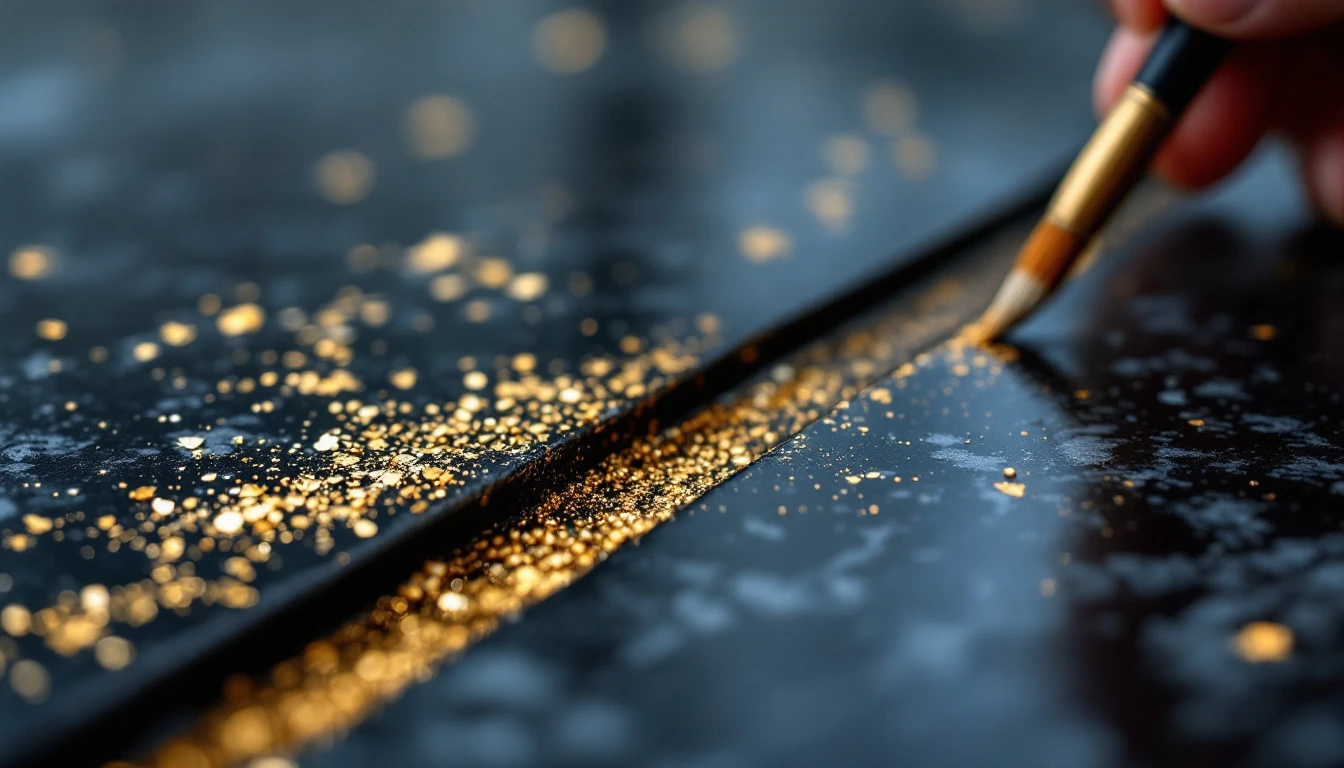
If the original inscription was gilded, the new name is normally gilded to match; if it was painted, painting usually keeps the memorial faithful to its design. We use genuine 23.75ct gold leaf for gilding work, the standard for monumental lettering. Renewing letters that have already faded — as opposed to adding brand-new text — is a different process, explained in our headstone lettering restoration guide.
Permission and practicalities
A headstone is not simply yours to alter, even when it marks your own family’s grave. Two permissions usually come into play before any lettering is added.
The memorial owner’s authority. The right to add to or change a memorial rests with the registered owner of the exclusive right of burial — often the person who arranged the original headstone, or whoever that right has since passed to. If that is not you, the owner’s consent is needed first. This matters most on shared family graves where several relatives have an interest.
The cemetery’s approval. Most cemeteries and burial authorities require a permit before lettering is added to a memorial in their grounds, and many keep a register of approved memorial masons. We are familiar with the rules of the major London cemetery operators and handle this approval as part of the job, so you are not left navigating the paperwork. We clean and care for graves at Brompton too, through memorial care at Brompton Cemetery. Our guide on whether you need permission to clean or work on a grave explains the wider picture of cemetery consent.
On site, not removed. In the great majority of cases the inscription is added in situ — at the graveside — so the headstone never leaves the cemetery. Working on site keeps disruption and cost down and means the memorial is not at risk in transit. Occasionally, where access is difficult or extensive re-lettering is involved, a stone may be taken away to a workshop, but this is the exception.
Timescales. The cutting and finishing of an inscription is not a long job in itself, usually carried out in a single graveside visit. The main wait is administrative — securing the cemetery’s permit can take a little time depending on the operator — so it is worth starting the process in good time, particularly if you are working towards an anniversary or a stone-setting. Our guide explains what happens at a Jewish stone-setting.
What does it cost?
Adding a new inscription starts from £120, depending on the number of letters, the finish you choose and the condition of the stone. A single name and dates added beneath an existing inscription sits at the lower end; a longer addition, gold leaf gilding, or full re-lettering of a whole memorial is quoted individually after we have seen it.
Because every memorial differs in size, lettering style and the work it needs, the only reliable figure is one based on a photograph or a visit. You can see an overview on our pricing page, and the full headstone lettering and gilding service sets out everything we offer, from new inscriptions to lead letters and gilding.
Adding a name to a headstone is a careful, dignified act of remembrance, and it deserves to be done by hands that will treat the memorial — and the family behind it — with respect. Memorial Guardian London adds new inscriptions, replaces lead letters and re-gilds lettering across all 32 boroughs and the area inside the M25. Our grave and headstone cleaning across North London is part of that coverage. If you would like an honest, no-obligation figure, request a free assessment and we will be glad to help.
Frequently asked questions
- Will the new letters match the original exactly?
- We match the font, size, depth and finish of the existing inscription as closely as possible, and on most memorials the result reads as one. On very old, hand-carved stones a flawless match is not always achievable because of natural irregularities in the original, but a skilled letterer gets extremely close.
- Do I need permission to add an inscription?
- Usually yes. The registered memorial owner's authority is needed, and most cemeteries require a permit before lettering is added. We handle the cemetery approval as part of the work and will advise you on the owner's consent.
- Can you add an inscription to any type of headstone?
- We add inscriptions to granite, marble, limestone, slate and sandstone memorials. The stone type affects the lettering technique and finish, which is one of the things we assess before quoting.
- Can you refresh the old lettering at the same time?
- Yes, and many families do. If the original inscription has faded, restoring it alongside the new name means the whole memorial reads evenly rather than leaving a fresh name standing out against tired older text. Our lettering restoration and re-gilding guide explains that side of the work, which starts from £95.
Headstone cleaning from £75 — before & after photos with every visit.
No need to attend. Free written quote, usually within 24 hours.
About the author
Practical guides written collectively by Memorial Guardian London's memorial care specialists, drawing on their day-to-day work cleaning and conserving graves and headstones across all 32 London boroughs.