Guides
How to Clean a Black Granite Headstone
Headstone cleaning from £75 — before & after photos with every visit.
No need to attend. Free written quote, usually within 24 hours.
In short: To clean a black granite headstone, rinse it with plain water, then wipe gently with a soft cloth or brush and a pH-neutral cleaner. Black granite is extremely hard and durable, but its polished, mirror-like finish is easily dulled by abrasives, acids and scourers — so never use cream cleaners, descalers or scouring pads. Buff it dry with a microfibre cloth to prevent water spots. A professional headstone clean starts from £75.
Black granite is the most common memorial stone in London cemeteries today — tough, dignified, and holding a deep polish that shows lettering beautifully. But that polish is its weak point. Unlike marble, which erodes and weathers, black granite almost never wears out; instead it loses its shine. The wrong method leaves it dull or scratched while the stone underneath is perfectly sound. This guide explains how to clean it safely and restore the shine when it looks tired. For Kemnal Park, we have a page on headstone cleaning at Kemnal Park Cemetery & Memorial Gardens.
Why black granite is different from marble
It comes down to hardness and porosity. Black granite is one of the hardest stones used for memorials, and when polished it is effectively non-porous — water and dirt sit on the surface rather than soaking in. A sound granite memorial therefore takes a careful clean without trouble, where a soft Victorian marble would be damaged by the same handling. We also clean graves at Strayfield Road, through headstone cleaning at Strayfield Road Cemetery.
So the issue with polished black granite is almost never erosion. It is the surface finish. The mirror polish is what abrasives, acids and harsh scrubbing destroy: once it is scratched or etched, the stone reads grey, hazy or patchy, and it cannot be washed back.
Marble is the opposite problem: soft, porous, acid-sensitive and prone to weathering. If your memorial is older, paler and not glossy, it may well be marble, which needs a gentler approach — see how to clean a marble headstone. If you are unsure which stone you have, our headstone stone-type cleaning guide explains how to tell them apart.
Common problems on black granite
A dark, reflective surface shows everything, so a few complaints recur:
- Water spots and limescale — pale, ringed marks where rain or hard tap water has dried. Very visible on black, and easily mistaken for permanent damage.
- White “bloom” or haze — a milky, chalky film that dulls the gloss, often from mineral deposits, old cleaning residues or surface weathering.
- Bird mess — unsightly and mildly acidic, so worth removing before it bakes on.
- Dulling of the polish — a loss of shine and depth, usually from grime, deposits and, all too often, past cleaning with the wrong products.
- Tired gold or silver lettering — a faded or patchy inscription that makes the whole memorial look neglected even when the stone is fine.
Most of these are surface issues, not damage — which is good news, because they respond well to correct cleaning.
The safe method, step by step
The right method is simple and forgiving. Work on a dry, mild day if you can.
- Rinse first. Wet the whole stone with plain water to float off loose dirt and grit before you touch it. This single step prevents most accidental scratching.
- Use a pH-neutral cleaner. If water alone is not enough, add a little pH-neutral cleaner. Neutral means neither acidic nor alkaline, so it lifts dirt without etching the polish.
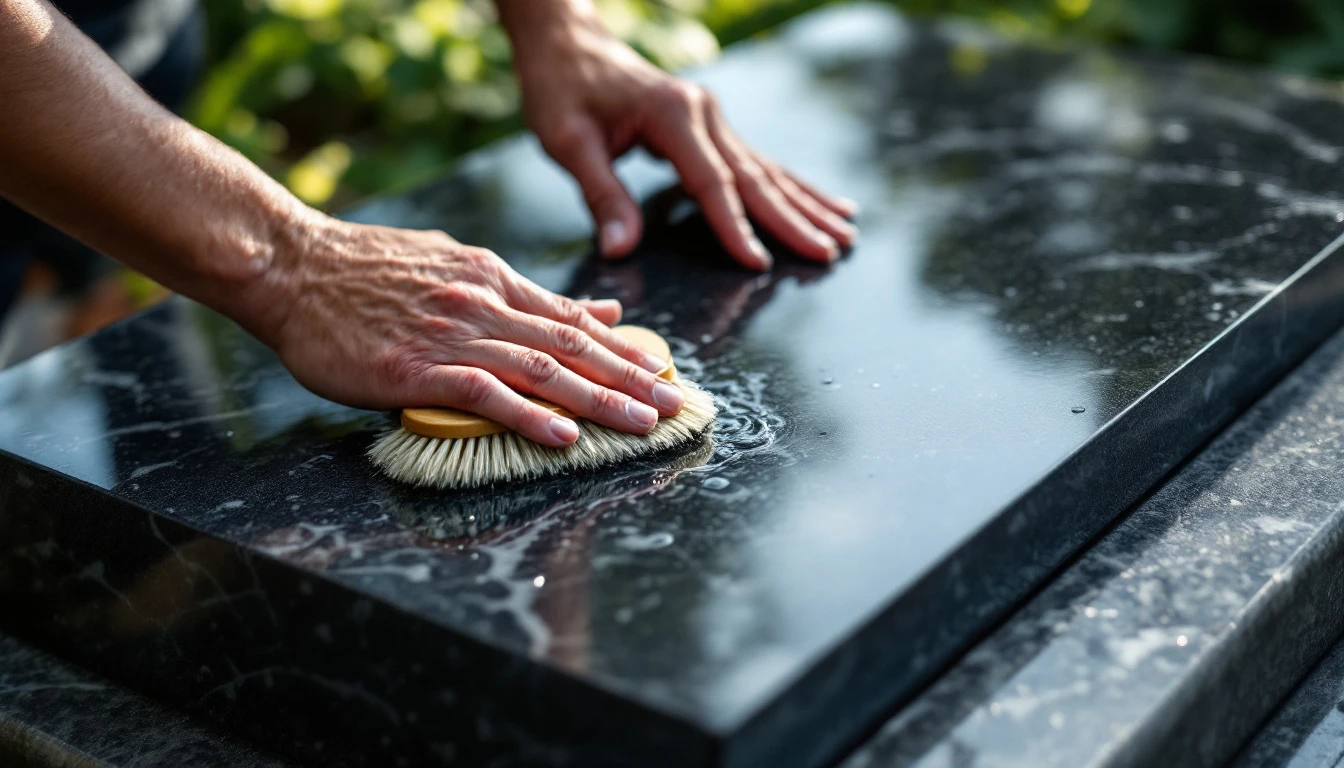
- Wipe gently with a soft cloth or brush. Light pressure only. Use a brush for carved lettering and corners a cloth cannot reach.
- Rinse thoroughly. Wash off every trace of cleaner — residue left to dry is a common cause of that white, hazy film.
- Buff dry with a microfibre cloth. This matters most on black granite: drying by hand prevents water spots and streaks and brings the gloss straight back up. Do not let it air-dry, as that is how water marks form.
What to avoid
The damage is usually invisible at first and permanent by the time it shows. Keep these away from polished black granite:
- Abrasive pads, scourers and wire brushes — they micro-scratch the surface and strip the gloss to a dull grey.
- Cream and “vim”-style cleaners — the fine grit that scours a kitchen sink does the same to a polish.
- Acidic descalers and limescale removers — even when they shift water marks, they etch the finish and leave a permanent matt patch.
- Bleach and strong household cleaners — unnecessary on granite and prone to leaving residues.
- Pressure washers — far too forceful; they drive water into joints and can damage lettering and fixings.
The short version: no grit, no acid, no force. We cover why each causes harm in what not to use on a headstone.
Restoring lost shine to black granite
If the polish has genuinely dulled — a true haze or grey cast rather than dirt — there is a limit to what a home clean can do, though a careful clean and a proper microfibre buff recover a surprising amount of shine, since much of what looks like dullness is surface film on a sound polish.
Where the gloss is worn or lightly scratched, restoring it is a job for a professional, who can safely re-polish and “feed” the stone rather than mask the problem — far safer than experimenting with polishing compounds at home, which scratch black granite easily if you pick the wrong grade. At Greenlawn, our team offers granite headstone cleaning at Greenlawn Memorial Park.
Refreshing the lettering at the same time
A clean stone often makes tired lettering look worse by contrast — once the granite gleams, faded gold or silver shows. Cleaning and lettering refresh pair naturally, so it is worth doing them together. Re-gilding starts from £95; our headstone lettering restoration guide explains what is involved.
When to call a professional
A simple wash-and-buff is within reach of most families. Hand it over to a specialist (see how to choose a grave cleaning company in London) when:
- the polish has dulled, hazed or scratched and you want the shine genuinely restored;
- there are stubborn white bloom, limescale or water marks a gentle clean will not shift;
- the lettering needs re-gilding alongside the clean; or
- the memorial is large, awkwardly sited, or hard to reach safely.
A professional clean brings conservation-grade, pH-neutral products and the right technique — no guesswork, no risk to the finish. Our headstone cleaning service starts from £75 and includes before-and-after photographs and a written report. For this stone in particular, see our granite headstone cleaning in London page.
A black granite memorial is built to last, and with nothing more than water, a pH-neutral cleaner and a microfibre cloth, most families can keep theirs deep and glossy for years. Our guide to how often a grave should be cleaned helps you set the timing. The rule is simple: clean gently, never scour or use acid, and always dry by hand.
If you would rather have it done with care — or if the shine, the water marks or the lettering need more than a home clean can give — Memorial Guardian London provides conservation-minded headstone cleaning from £75 across all 32 London boroughs and the area inside the M25, with before-and-after photographs on every visit. Request a free, no-obligation assessment.
Frequently asked questions
- Why does my black granite headstone have white marks, and can I use vinegar or a descaler on them?
- The usual causes are limescale and water spots — minerals left when rainwater or hard tap water dries on the surface — or a white "bloom" from old cleaning residues. They look alarming but are usually surface deposits, not damage. Do not reach for vinegar, lemon or a descaler: these are acidic, and acid etches polished granite, leaving a permanent matt patch where the shine used to be. A gentle pH-neutral clean and a thorough microfibre buff will lift most marks; if they will not budge, have them treated professionally.
- How do I bring the shine back to a dull black granite gravestone?
- First clean it properly — much "dullness" is surface film that lifts with a pH-neutral clean and a microfibre buff. If the gloss is genuinely worn or lightly scratched, the stone needs professional re-polishing; do not attempt this at home with polishing compounds, which can scratch granite if the wrong grade is used.
- How often should I clean a black granite headstone?
- Once or twice a year is plenty for most memorials — a light clean in spring and perhaps before a significant anniversary. Wiping off bird mess when you notice it and keeping the base clear of debris keeps the stone at its best without over-handling it.
- Do I need permission to clean the headstone?
- In many London cemeteries and churchyards the registered grave owner's consent is needed before cleaning or restoration, and some have rules about products and methods. It is worth checking before you start.
Headstone cleaning from £75 — before & after photos with every visit.
No need to attend. Free written quote, usually within 24 hours.
About the author
Practical guides written collectively by Memorial Guardian London's memorial care specialists, drawing on their day-to-day work cleaning and conserving graves and headstones across all 32 London boroughs.